Highlights:
- 500+ Years of Resilience: Tampa Bay’s Black history dates to the 1500s, with milestones including maroon communities, emancipation in 1864, and trailblazers like Madame Fortune Taylor — a formerly enslaved woman who built a citrus empire and whose legacy lives on in the Fortune Taylor Bridge.
- A Community Built from Within: Despite segregation, Central Avenue flourished from the 1920s to the 1950s as the “Harlem of the South,” a vibrant hub of Black-owned businesses, culture, and community leadership now honored at Perry Harvey Sr. Park.
- History Lost and Preserved: Urban renewal erased landmarks such as the Dobyville neighborhood and Zion Cemetery, but the Tampa Black History Museum at Encore, the Dr. Carter G. Woodson Museum, and the Soulwalk heritage trail keep these stories alive.
Tampa Bay’s Black history spans over 500 years, weaving a tapestry of resilience, entrepreneurship, and cultural innovation that fundamentally shaped our region. While much of this history has been obscured by urban renewal and the passage of time, these stories deserve to be told and celebrated.
The story begins with the first people of African descent arriving in the 1500s with Spanish explorers. By the 1700s and 1800s, maroon communities formed when escaped enslaved people from Georgia and the Carolinas found refuge in Florida, often settling alongside Seminole tribes. Freedom officially came to Tampa’s enslaved African Americans on May 5, 1864.
Madame Fortune Taylor: A Pioneer’s Legacy
Perhaps no figure better exemplifies early Black Tampa’s determination than Madame Fortune Taylor (1825-1906). Born into slavery in South Carolina, Fortune and her husband, Benjamin, established one of Tampa’s first citrus operations on 33 acres along the Hillsborough River.
In 1866, they became the second Black couple to legally marry in Hillsborough County. When Benjamin died in 1869, Fortune secured the homestead in her name—remarkable for a Black woman in the post-Civil War South. The street through her property was named Fortune Street, and the 1892 Fortune Street Bridge connecting downtown to West Tampa’s cigar industry became vital to the city’s growth. Today, the Fortune Taylor Bridge and Riverwalk trace the outlines of her land.
Central Avenue: The Harlem of the South
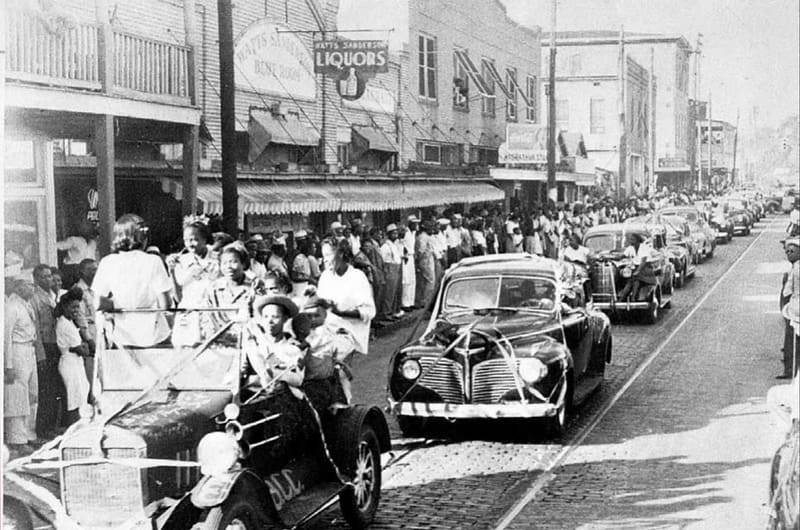
From the 1920s through the 1950s, Tampa’s Central Avenue earned the nickname “Harlem of the South.” Segregation forced Black residents into specific areas, but from that injustice emerged a thriving community bursting with Black-owned businesses—doctors’ offices, insurance companies, law firms, entertainment venues, and Tampa’s first Black library. The area pulsed with jazz, dance halls, and cultural pride.
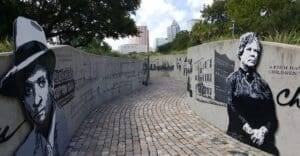
Perry Harvey Sr. Park now honors this legacy with sculptures, public art, and tributes to influential community members. The park is named for a union leader who fought for better conditions for Tampa’s predominantly Black dock workers.
A History That Demands Remembrance
 Tragically, many historic Black sites no longer stand. Neighborhoods like Dobyville were demolished in the 1970s to make way for the Lee Roy Selmon Expressway. The recently rediscovered Zion Cemetery—purchased in 1901 to allow Black residents to bury loved ones according to their own traditions—now lies beneath housing developments and businesses.
Today, you can connect with this history through Tampa’s Black History Museum at Encore, the Tampa Bay History Center’s “Travails and Triumphs” exhibit, the Dr. Carter G. Woodson Museum in St. Petersburg, and Soulwalk—an arts and heritage trail spanning nearly 100 destinations.
The next time you cross the Fortune Taylor Bridge or walk through Perry Harvey Sr. Park, remember: you’re traveling through history that shaped Tampa Bay into the vibrant, diverse region it is today.